Wildlife Birthing Season: What Homeowners Should Know About Raccoon, Squirrel, and Skunk Litters
Spring is here, and with warmer weather comes baby wildlife season. Raccoons, squirrels, and skunks begin having their litters during this time, which means homeowners may suddenly hear scratching, squeaking, or movement in their attic, soffits, decks, or crawl spaces.
Understanding how these animals raise their young can help homeowners avoid costly mistakes and ensure that wildlife is handled humanely and responsibly.
When Is Wildlife Birthing Season?
Most nuisance wildlife species give birth in early spring, although some species can have a second litter later in the summer.
Typical birthing seasons include:
-
Raccoons: March – May
-
Skunks: April – June
-
Squirrels: February – April and again in July – September
During this time, female animals search for safe, warm den sites, which often leads them into attics, chimneys, sheds, and under decks.
How Many Young Do They Have?
Different wildlife species produce different litter sizes.
Raccoons
-
Average litter: 3–5 kits
-
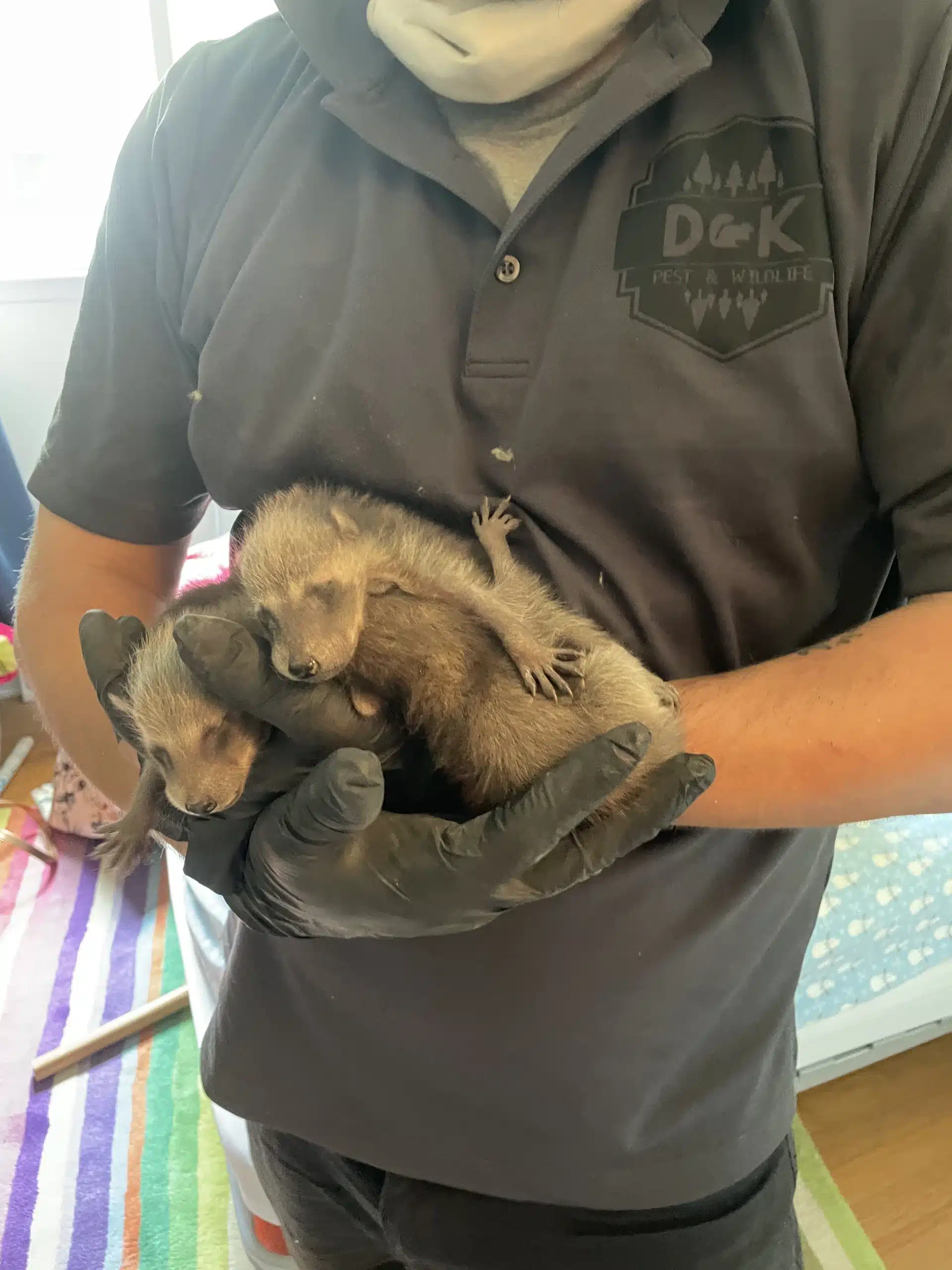
Born blind and dependent on their mother
-
Remain in the den for 6–8 weeks
Raccoons commonly den in attics, chimneys, and soffits, where the mother feels the babies are protected.
Squirrels
-
Average litter: 2–4 pups
-
Two breeding seasons per year
-
Frequently nest in attics, wall cavities, and soffits
Young squirrels remain in the nest for about 6–7 weeks before exploring outside.
Skunks
-
Average litter: 4–7 kits
-
Often den under decks, sheds, and porches
-
Babies stay with the mother for 2–3 months
Because skunks prefer ground dens, homeowners often notice digging around foundations or strong odors near the den site.
Signs You May Have Kits or Pups in Your Home
If you suddenly notice wildlife activity in spring, it may indicate a mother with a litter nearby.
Common signs include:
-
Scratching or movement in the attic or walls
-
High-pitched squeaking or chirping
-
Increased activity from a single adult animal
-
Entry holes around rooflines, soffits, or vents
-
Digging under decks or sheds
During this time, wildlife removal must be handled carefully and humanely.
Why One-Way Doors Can Be a Problem During Birthing Season
One-way exclusion doors are commonly used in wildlife control to allow animals to exit a structure without re-entering.
However, during baby season this method can create serious problems.
If a mother raccoon or squirrel is excluded while her babies remain inside:
-
The babies will starve and die in the structure
-
Decomposition causes strong odors
-
The mother may tear into the structure trying to reach her young
-
Secondary pest problems can occur
For this reason, one-way doors should generally not be used during active baby season unless the young are old enough to leave with the mother.
The Humane Box Method
One of the safest and most humane techniques for dealing with wildlife litters is called the humane reunion box method.
How It Works
• The technician locates and carefully removes the kits or pups from the den.
• The young are placed in a secure, ventilated reunion box outside near the entry point.
• The mother returns at night and relocates the young to a new den site.
This allows the animals to stay together while still resolving the wildlife conflict.
The method is commonly used for:
-
Raccoons
-
Squirrels
It is one of the most effective ways to ensure humane wildlife removal while protecting your home.
Why Professional Removal Matters
Handling wildlife with babies requires experience and proper techniques. Improper removal attempts can lead to:
-
Injured wildlife
-
Dead animals inside structures
-
Property damage
-
Dangerous encounters with protective mothers
Professional wildlife control specialists understand animal behavior, denning habits, and the correct seasonal removal strategies.
Preventing Wildlife From Returning
Once wildlife is removed, prevention is key.
Homeowners should consider:
-
Sealing roofline gaps and soffits
-
Repairing damaged vents
-
Installing chimney caps
-
Securing crawl spaces and decks
-
Trimming branches away from roofs
Proper exclusion ensures that wildlife cannot return to the same den site next season.
Need Help With Wildlife in Your Home?
If you hear scratching in the attic or suspect wildlife has moved into your home during baby season, it’s important to act quickly.
Humane, professional wildlife removal protects both your property and the animals involved.
Contact a licensed wildlife control professional to safely remove the animals and prevent future problems.