Guide for Wasp Control, Identification, & Behavior.
Discover comprehensive pest management strategies for carpenter bees, paper wasps, yellow jackets, bald faced hornets, and mud daubers.
Understanding Our Pest Control Approach
Yellow Jackets, Bald-Faced Hornets, Carpenter Bees, Mud Daubers & Paper Wasps**
Stinging insects are among the most common threats to homes and businesses throughout Illinois. From aggressive nest-defending species like yellow jackets and hornets, to wood-damaging carpenter bees, each insect behaves differently, nests differently, and requires its own removal strategy. Understanding which stinging insect you’re dealing with helps determine the safest and most effective treatment.
This guide breaks down how to identify, locate, and respond to each type of stinging insect.
Yellow Jackets
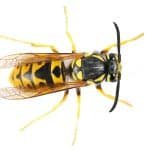
Yellow Jackets are one of the most aggressive stinging insects in the Midwest and will defend their nests in large numbers. They are often mistaken for honey bees but can be identified by their sleek body and intense yellow/black striping.
Key Identifiers
-
Size: ⅜–⅝ inch
-
Smooth, narrow body
-
Bright yellow and black coloration
-
Fast, “choppy” flight pattern
Nest Locations
-
Ground holes
-
Wall voids
-
Attics
-
Landscaping timbers
-
Abandoned rodent tunnels
Behavior
-
Highly territorial
-
Sting repeatedly
-
Attracted to food, sweets, BBQs, outdoor trash bins
Why They’re a Problem
-
High risk of multiple stings
-
Aggression increases in late summer
-
Nest expansion can damage structures
Bald Faced Hornets
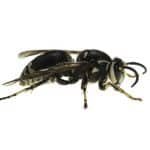
Despite their name, bald-faced hornets are actually a type of yellow jacket, known for their smooth black and white body and large enclosed nest.
Key Identifiers
-
Larger than yellow jackets
-
Black with white face and markings
-
Long, smooth body
Nest Locations
-
Paper nests suspended from:
-
Trees
-
Rooflines
-
Soffits
-
Sheds
-
Deck ceiling corners
-
Behavior
-
Extremely defensive of nest
-
Capable of repeated stings
-
Will chase perceived threats
Why They’re a Problem
-
Nests can reach basketball size
-
Strong sting and venom
-
Dangerous to remove without proper PPE and treatment foam

Carpenter Bees
Carpenter bees do not eat wood, but bore tunnels to nest—causing structural weakening over time. They resemble bumble bees but have a shiny, hairless black abdomen.
Key Identifiers
-
Large, bumblebee size
-
Shiny black abdomen (no fuzz)
-
Males hover and “guard” but cannot sting
Nest Locations
-
Decks
-
Fascia boards
-
Fence rails
-
Porch overhangs
-
Unpainted or weather-exposed wood
Behavior
-
Return to and enlarge tunnels every year
-
Attract woodpeckers seeking larvae
-
Holes appear as clean, perfect circles
Why They’re a Problem
-
Repeated return = long term wood damage
-
Multiple tunnels weaken support structures
-
Siding and trim replacement cost rises quickly
Paper Wasps
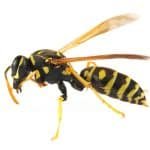
Paper wasps form umbrella-shaped open comb nests under sheltered areas. They are less aggressive than yellow jackets unless directly threatened.
Key Identifiers
-
Slender body; long legs that dangle in flight
-
Rusty, brown, or black depending on species
-
Smaller colonies—up to 30 wasps
Nest Locations
-
Under eaves
-
Porch ceilings
-
Light fixtures
-
Barns & sheds
-
Patio furniture stored overwinter
Behavior
-
Mild temperament unless disturbed
-
Prey on caterpillars & yard pests
-
Live in small colony clusters
Why They’re a Problem
-
Face-level nests near walkways create risk
-
Stings still trigger allergic reactions
-
Rapid expansion in spring
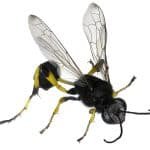
Mud Dauber
Mud daubers are solitary wasps known for unique “mud tube” nests. They are not aggressive, and rarely sting, but their abandoned nests attract other insects.
Key Identifiers
-
Long, skinny body
-
Thread-like waist
-
Slow, hovering movements
Nest Locations
-
Sheds
-
Garages
-
Outdoor electrical boxes
-
Crawl space access doors
-
Under decks
Behavior
-
Solitary nest builders
-
Capture spiders to feed larvae
-
Abandon nests—yellow jackets may reuse them
Why They’re a Problem
-
Nests become pest attractants
-
High activity near entry doors is a nuisance
Why Professional Stinging Insect Removal Matters
DIY nest removal can lead to:
-
Multiple stings
-
Fall hazards from ladders
-
Spreading colonies deeper into the home
-
Incomplete removal and re-infestation
Safe removal requires correct timing, protective equipment, treatment product choice, and structural sealing.
Common Questions About Pest Control
Find answers to your most pressing pest control questions, specifically about carpenter bees, wasps, and hornets.
How can I identify carpenter bees?
Carpenter bees resemble bumblebees but have a shiny, black abdomen. They often hover around wooden structures.
What attracts paper wasps to my home?
Paper wasps are attracted to sheltered areas and food sources like sugary drinks and ripe fruit.
How do I safely remove a yellow jacket nest?
It’s best to contact a professional like D&K Pest Control, as yellow jackets can be aggressive and dangerous.
Are bald-faced hornets dangerous?
Yes, bald-faced hornets are aggressive and can sting multiple times. Professional removal is recommended.
What should I do if I find mud daubers?
Mud daubers are generally non-aggressive, but if they’re a nuisance, D&K can treat and remove their nests.
Ready to Take Action?
Schedule Professional Wasp Control Today
If wasps are nesting on your property or creating a sting risk, don’t wait for the problem to escalate. Contact D&K Pest Control & Wildlife Removal to schedule a professional wasp inspection and safe, effective removal.


